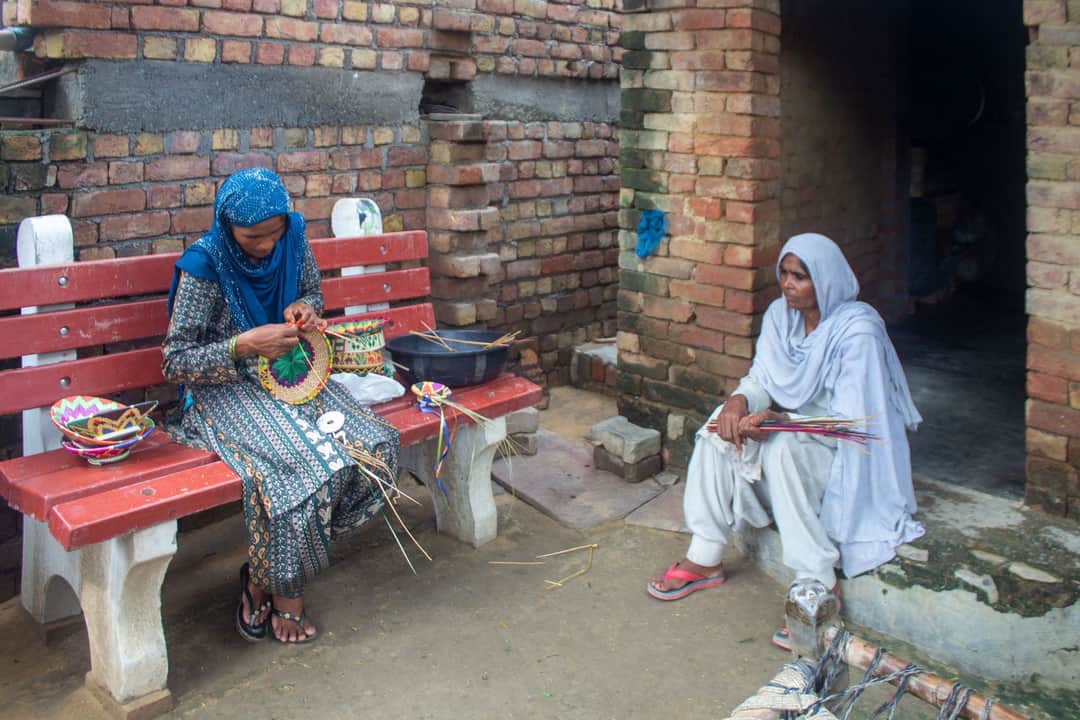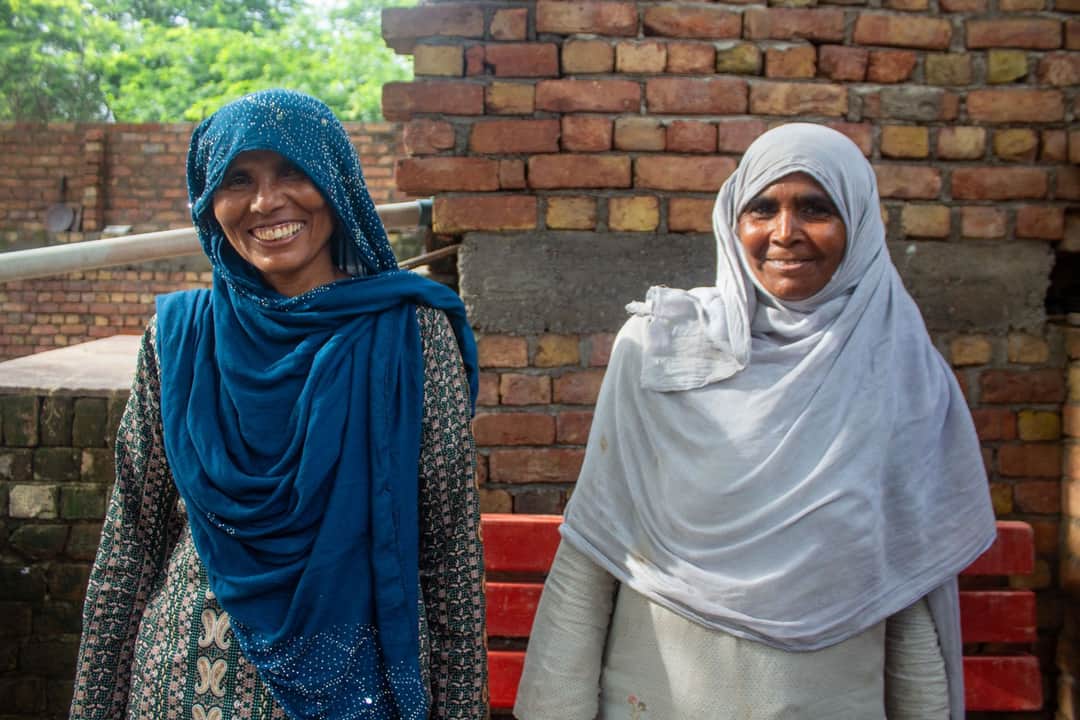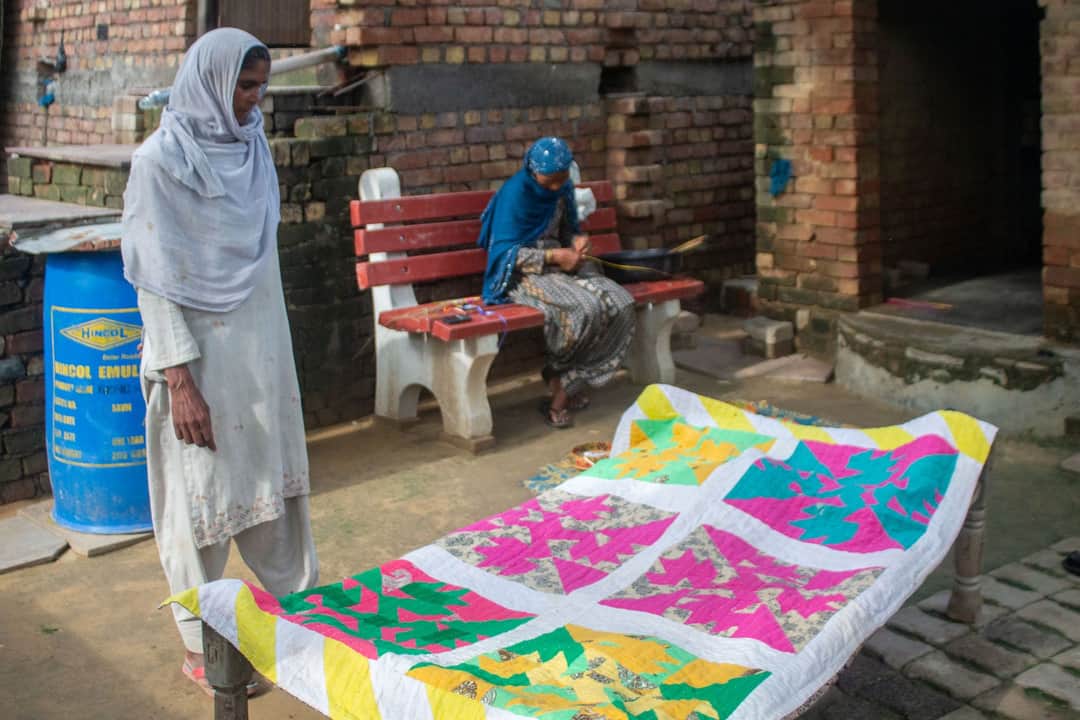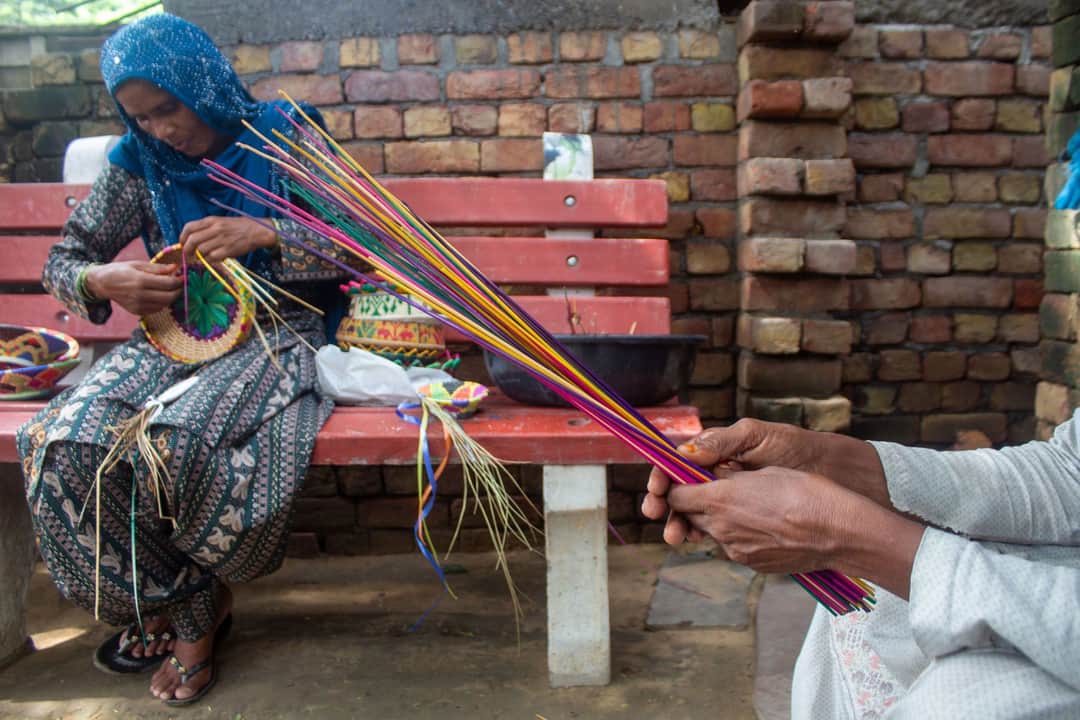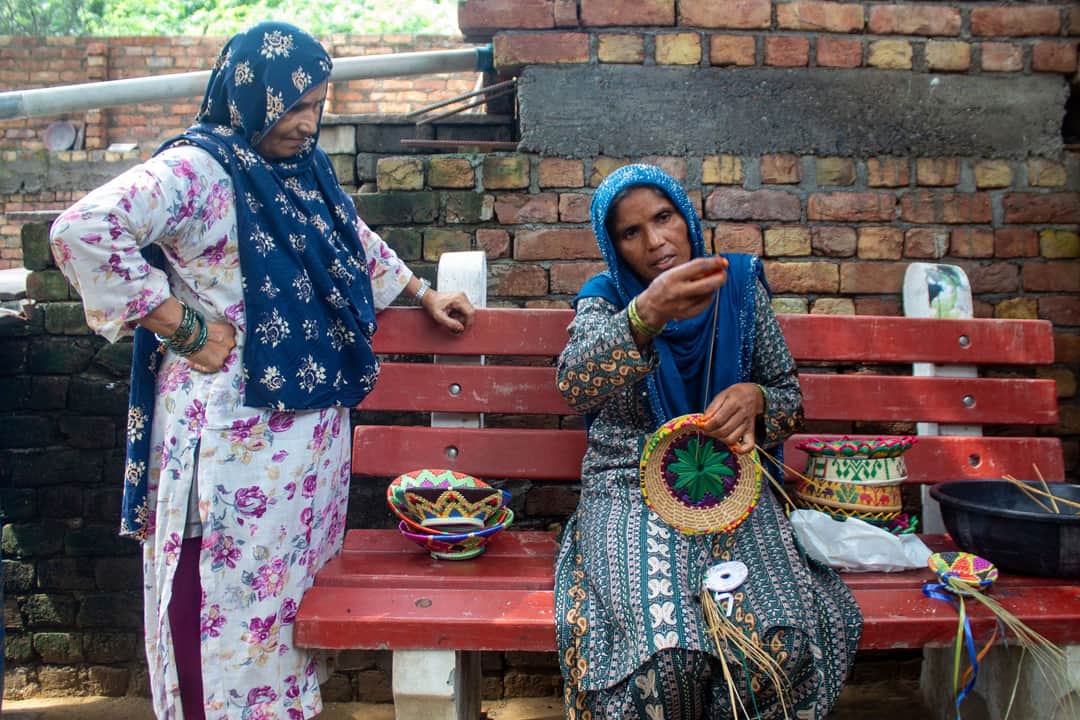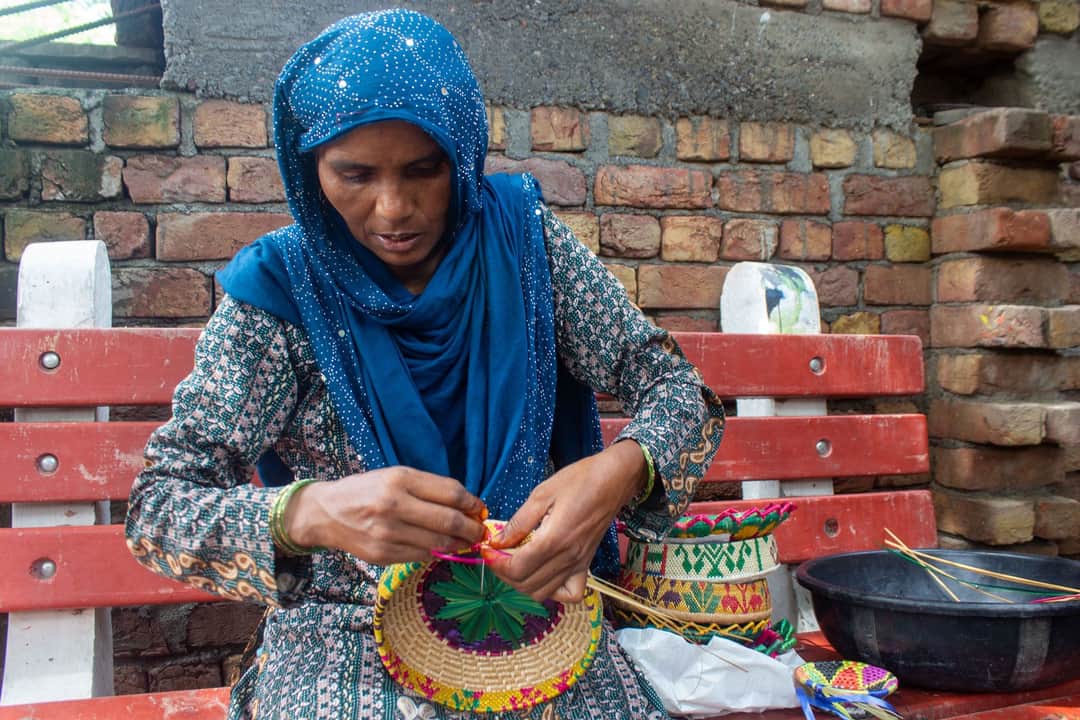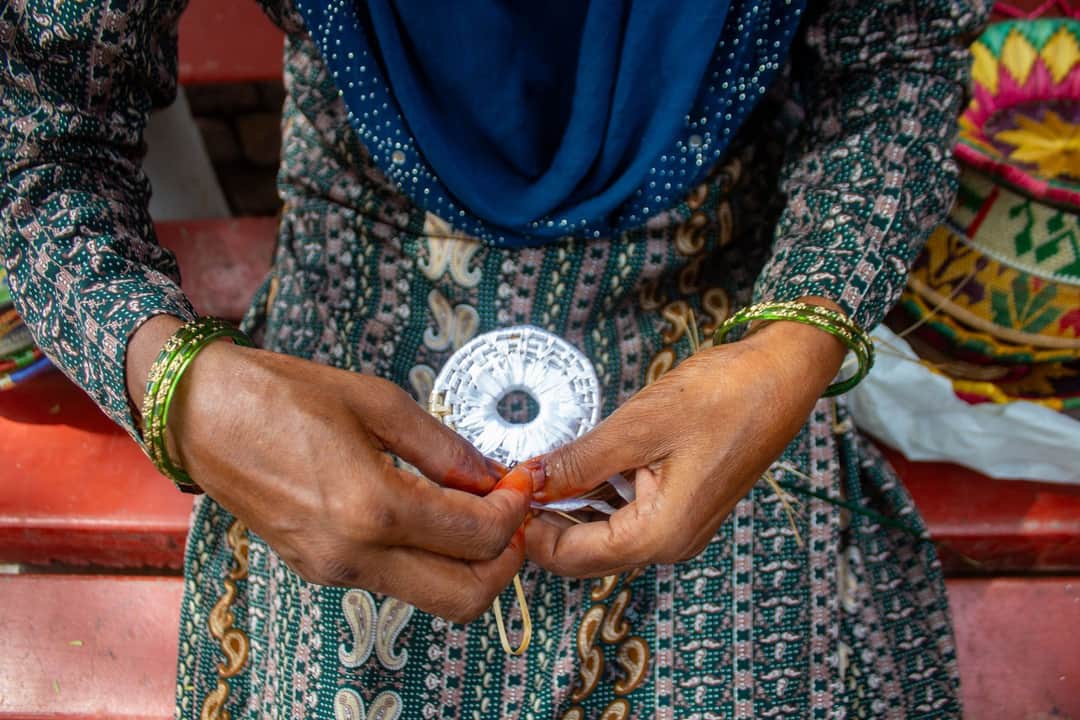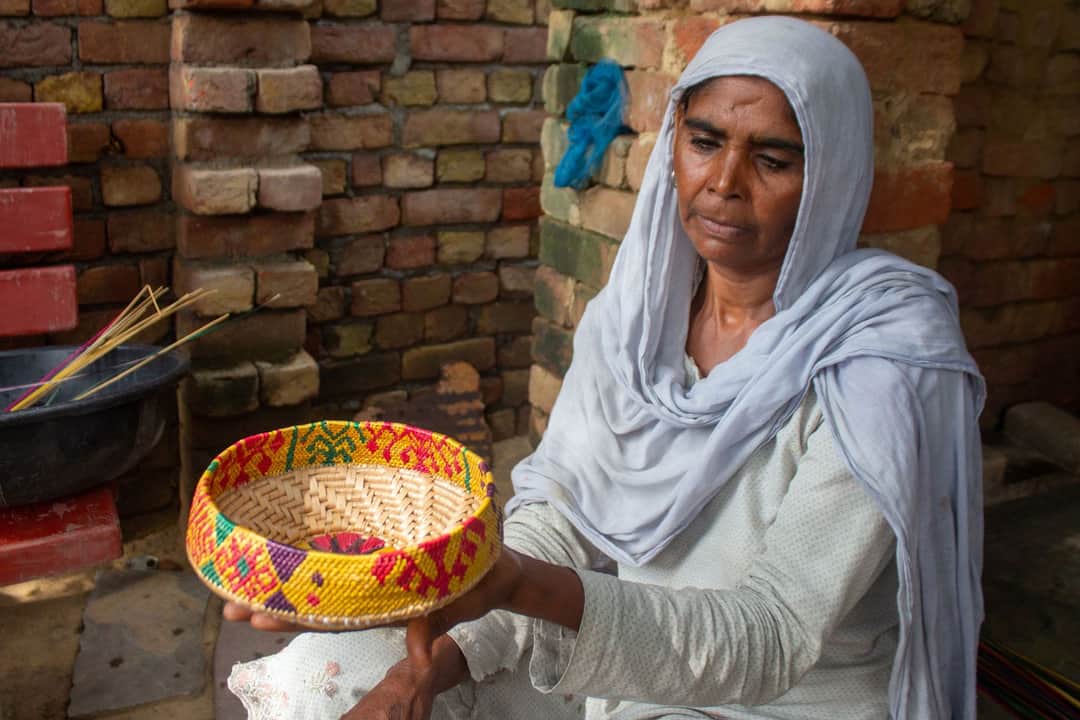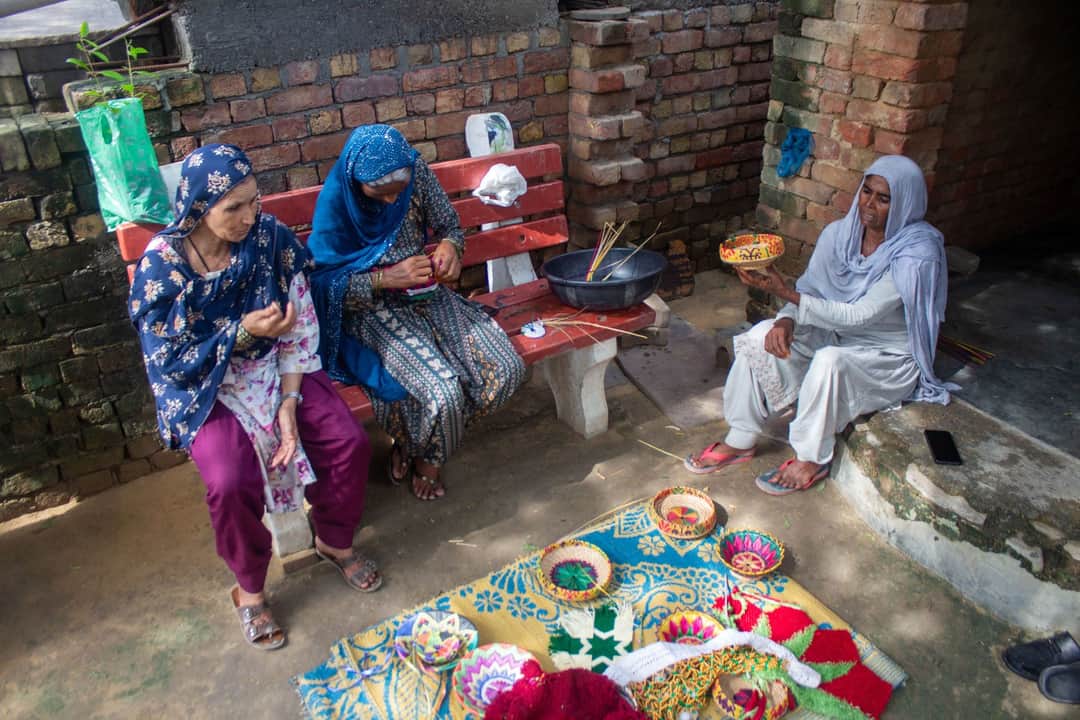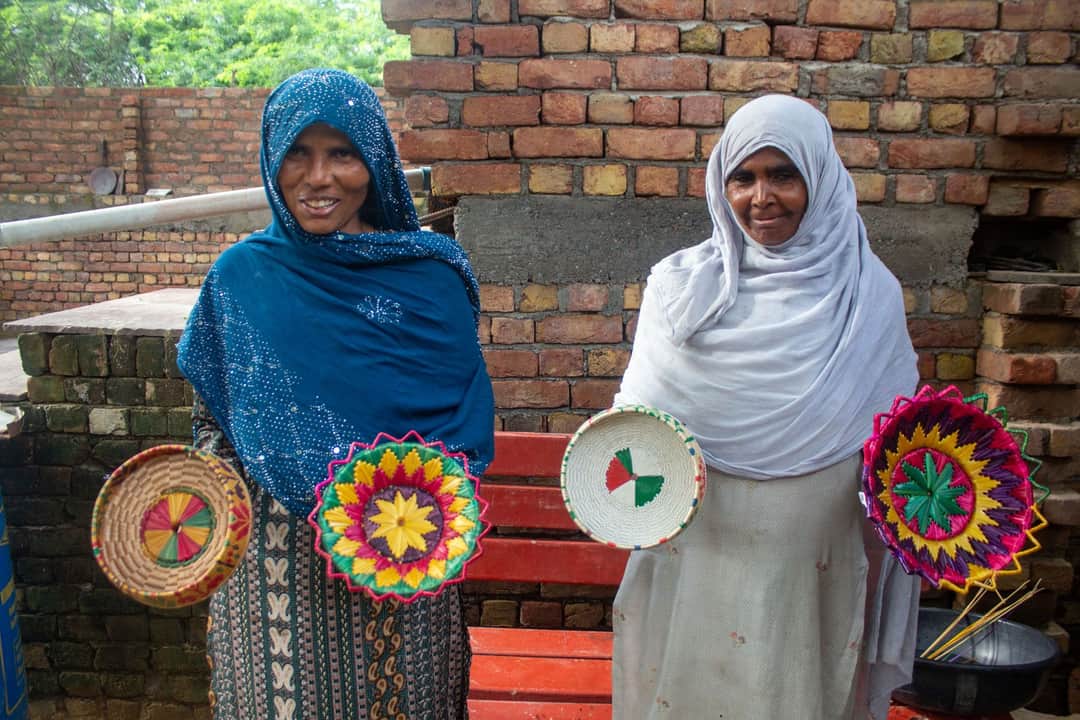

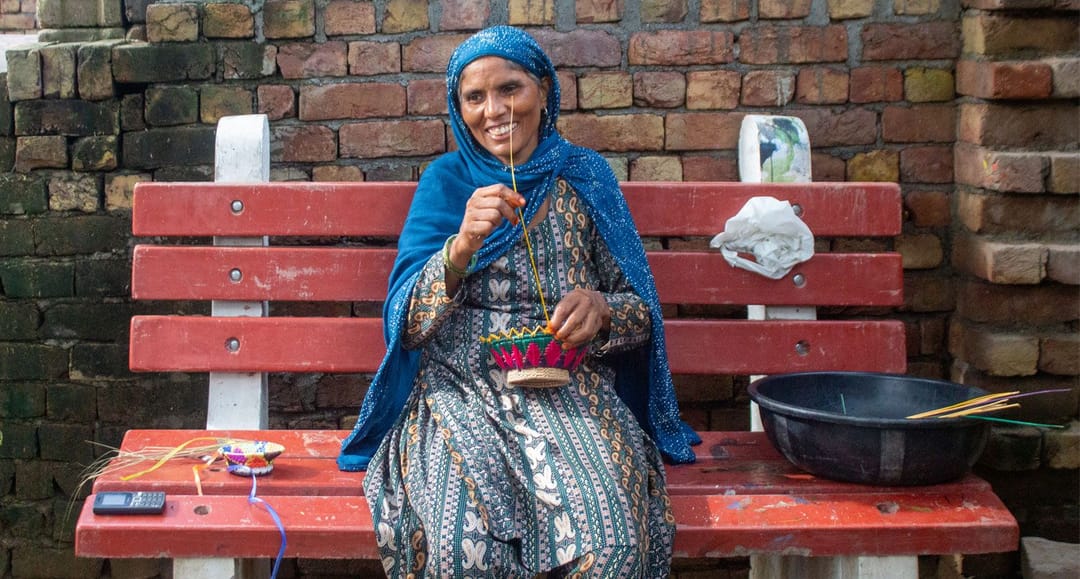
Asmina, 48, shares a laugh with co-worker Zubeida as they recall the time they crafted miniature baskets from leftover sticks of wheat straw their mothers threw away. Like most girls in the Mewat region, they learned to weave because their mothers insisted, never imagining this could one day become a source of livelihood.
“We used to make them and just give them away to our relatives. Ab jab bikan lagen to hum na deven free mein [Now that they sell, we don’t give them away for free],” Asmina chuckles.
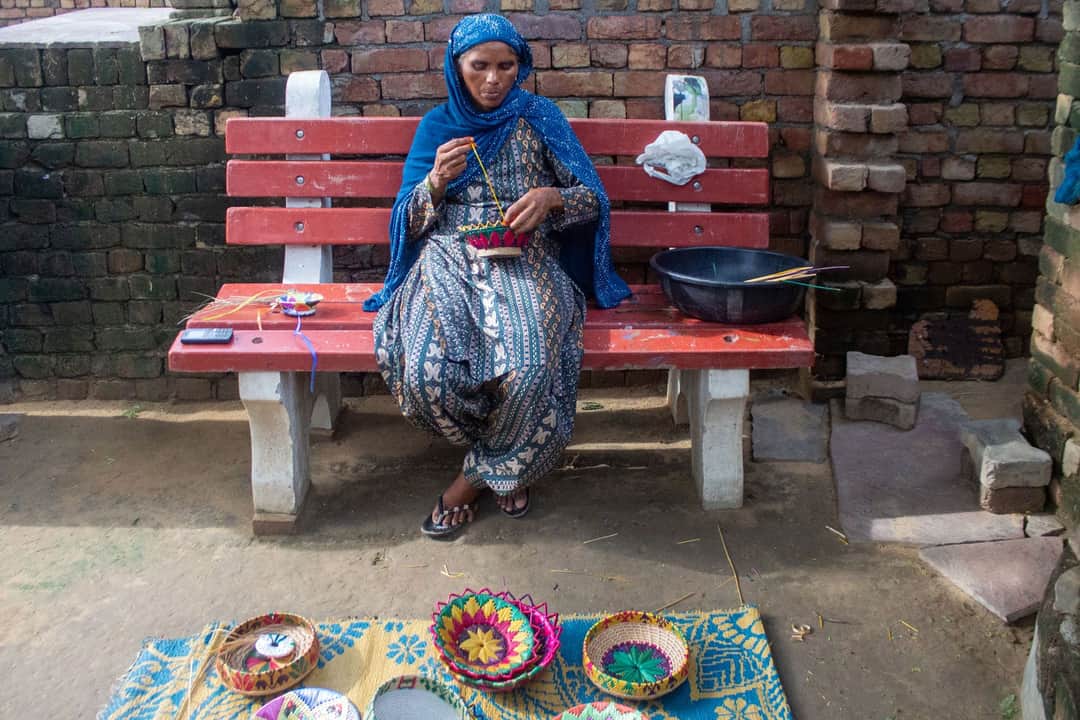
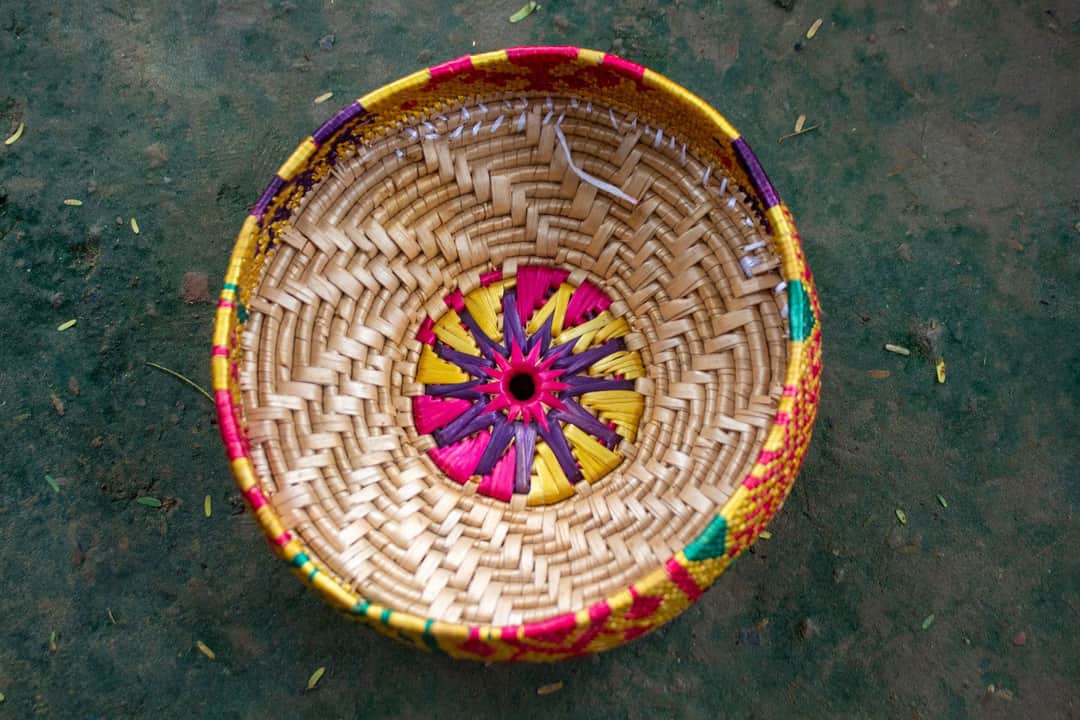
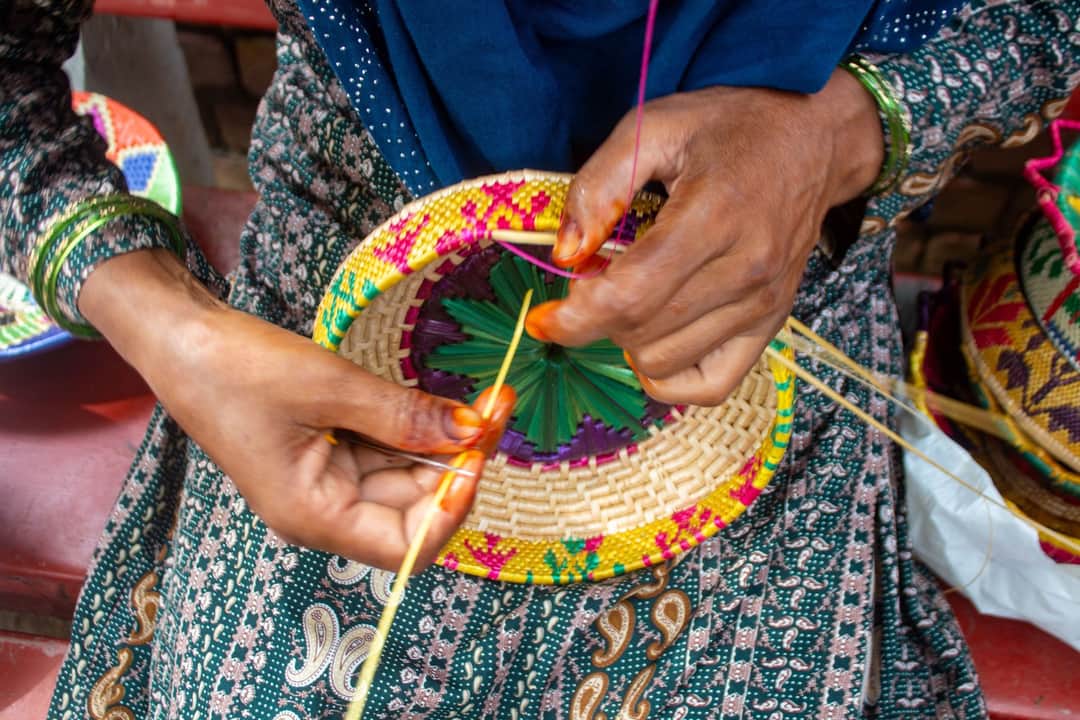
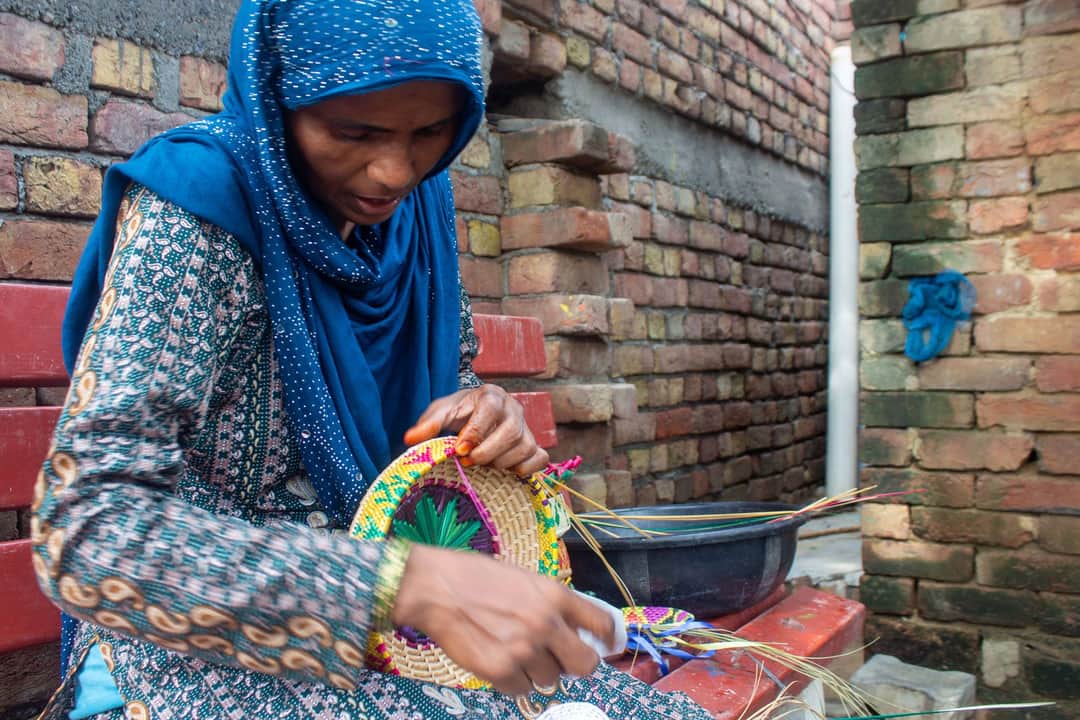
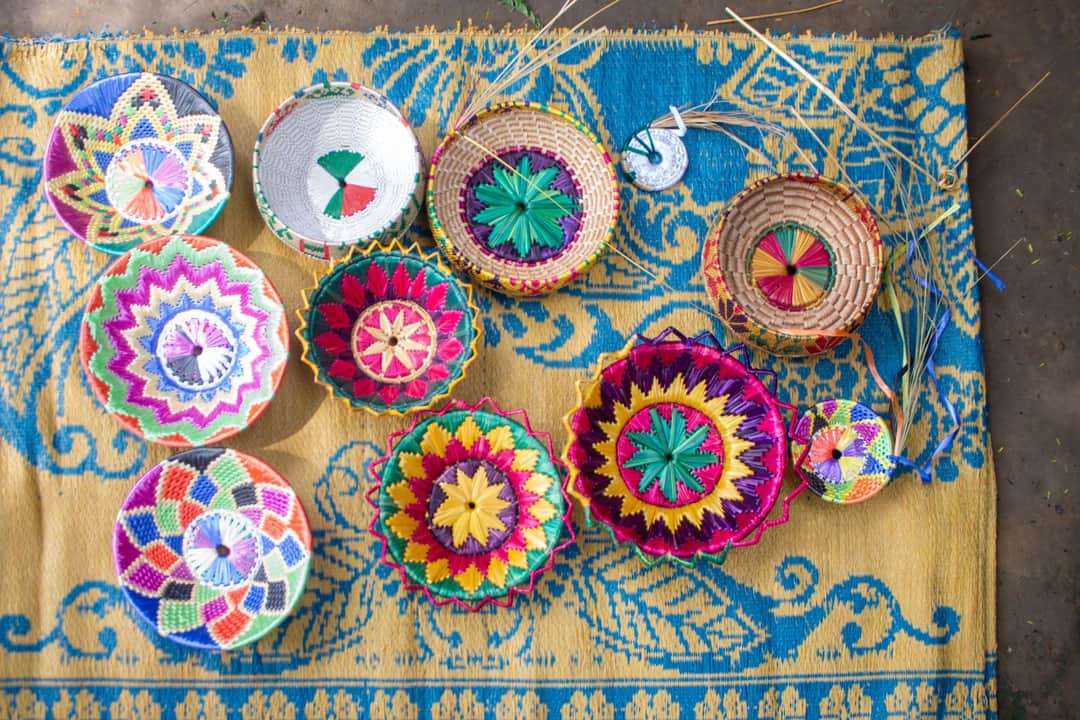
Seated on a cement bench in the courtyard of her house at Ghasera village in Haryana’s Nuh district, she pulls out an arm-length stick of desi gehun (indigenous wheat straw) and splits it into five strands using a fine needle. Selecting one strand, she deftly weaves it into the growing curve of the changeri (shallow basket) she is making.
“Agar ghar mein mehman aago aur changeri mein roti dhar ke na di, to yu kenge ki Asmina ne plate mein roti dhar ke di, changeri mein na di [If guests come home and I don’t serve the rotis in a changeri, they’ll complain that the rotis were served in a plate],” Asmina says.
Changeri are multipurpose baskets that women in the Mewat region of Haryana and Rajasthan have traditionally woven. There was a time when these were a part of the gifting ritual at weddings, on Eid and other festive occasions.